What Will You See Snorkeling in San Juan, Puerto Rico?
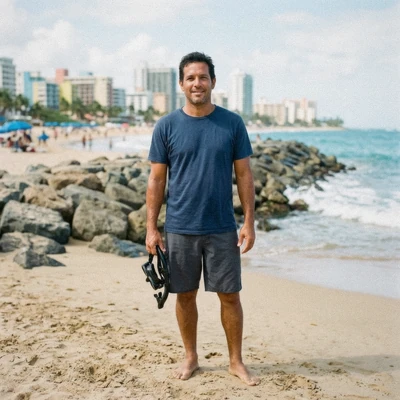
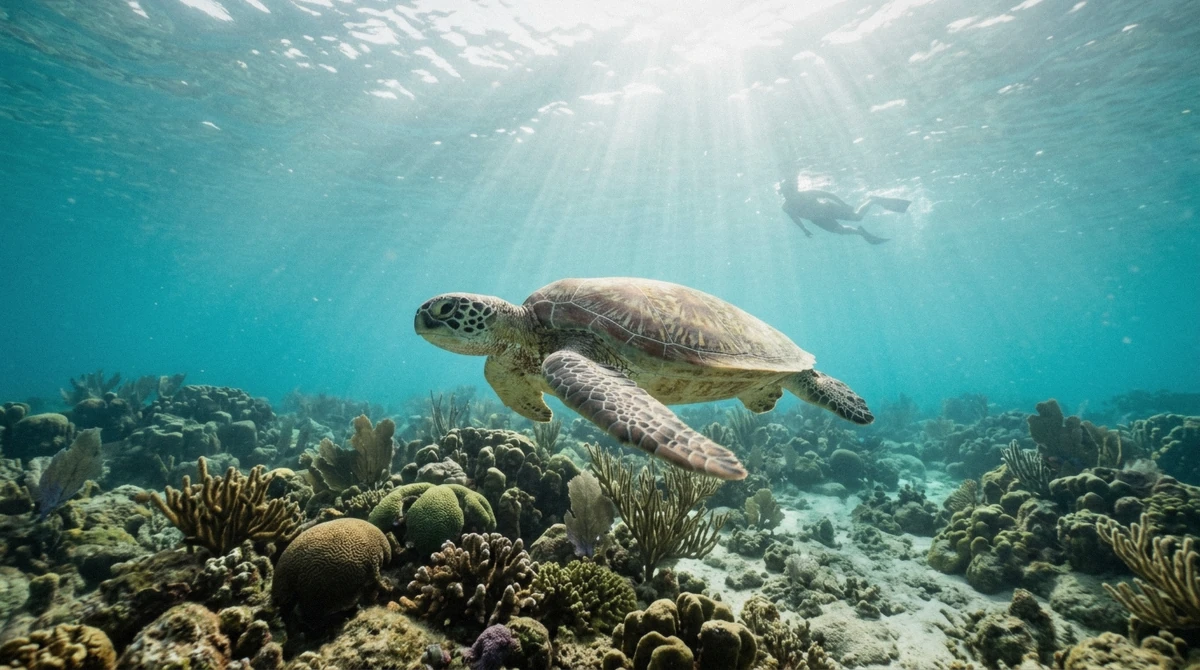
What will you see snorkeling in San Juan Puerto Rico? On a typical trip, you'll almost always see a green sea turtle and a handful of blue tangs at Escambrón, very often an Antillean manatee if your tour reaches Condado Lagoon, and, on a good day, a spotted eagle ray gliding through a sandy channel. This guide ranks every species we've actually logged across San Juan's snorkel sites by honest likelihood, not marketing promise, because every operator's own page already claims amazing wildlife and this one won't repeat that. Below: what shows up nearly every trip, what's a lucky-day find, exactly where each one lives, and the rules that keep the marine park worth visiting.
Quick answer
You'll almost always see a green sea turtle and blue tangs at Escambrón, very often an Antillean manatee on tours that reach Condado Lagoon, regularly a parrotfish or two, and, on a good day, a spotted eagle ray or an octopus tucked into the rocks.
Key takeaways
- Green sea turtles, blue tangs and sergeant majors show up on nearly every trip to Escambrón Marine Park
- Manatees are a most-trips sighting on the Sea Turtle & Manatee snorkeling tour, which operators report spots one on roughly 9 in 10 outings
- This isn't the place for coral walls or sharks; if that's what you're after, see the myth-buster section below
- See the full likelihood breakdown, month by month, in the At a Glance table
- For kid-friendly sightings and what's easiest for a young child to spot, check our snorkeling with kids guide
- Rules of the Reef cover the federally protected species and the 50-foot rule before you go
At a Glance
The full species list, ranked by how often each one actually shows up rather than alphabetically.
| Species/Sight | Where in San Juan | Best months | How likely |
|---|---|---|---|
| Green sea turtle | Escambrón Marine Park | Year-round | Nearly every trip |
| Blue tang | Escambrón Marine Park and Playita del Condado | Year-round | Nearly every trip |
| Sergeant major | Escambrón Marine Park, around the rocks | Year-round | Nearly every trip |
| Parrotfish | Escambrón Marine Park reef | Year-round | Most trips |
| Antillean manatee | Condado Lagoon and the Playita del Condado outlet | Year-round, calmest months best | Most trips |
| Porcupinefish (pufferfish) | Escambrón Marine Park, rocky ledges | Year-round | Regular but not every trip |
| Snook and tarpon | Condado Lagoon, near the Dos Hermanos bridge channels | Year-round | Regular but not every trip |
| Octopus | Escambrón Marine Park rocks, calm dawn sessions | Year-round | Lucky-day sighting |
| Spotted eagle ray | Batería del Escambrón, sandy channels | Year-round | Lucky-day sighting |
| Hawksbill turtle | Deeper reef beyond Escambrón's main cove | Year-round | Rare |
The top three rows are the trip's real backbone. Green sea turtles are the headline sighting and the reason most people book, blue tangs and sergeant majors fill the water around the rocks the moment you put your face in, and everything below that is a genuine bonus rather than a promise. Manatees sit in their own category: not a near-certainty like the top three, but common enough on the right tour that we'd call the odds good, not lucky.
Almost Every Trip
Green Sea Turtle
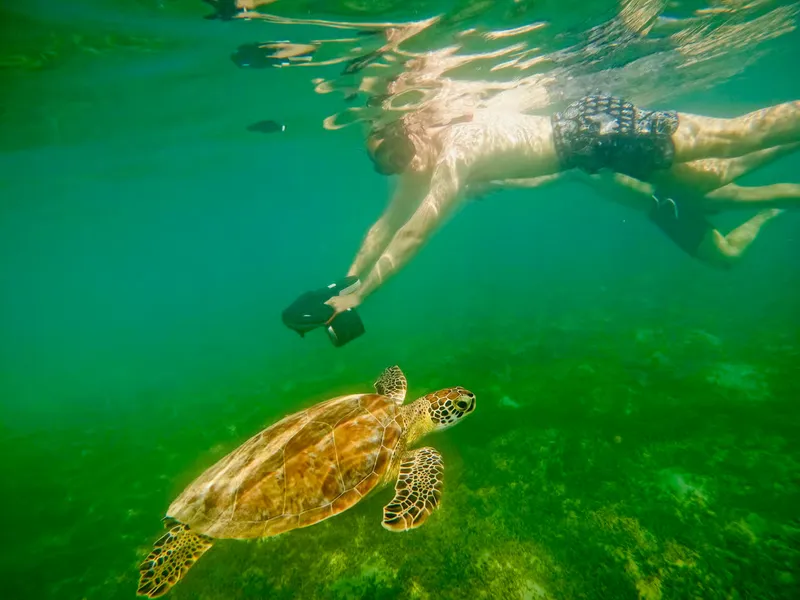
A large, dark green-brown shell and a small blunt head are the giveaway; adults run 3 to 4 feet across the shell. Found grazing on sea grass and algae around the rocks at Escambrón Marine Park, year-round, on nearly every trip. Green sea turtles surface every few minutes to breathe, then dip back down to graze, unhurried around swimmers who keep a respectful distance.
The legal minimum viewing distance is 50 feet under NOAA guidance, roughly the length of a bowling lane, and every guide here holds groups to it.
Blue Tang
A flat, oval body in a deep electric blue with a yellow tail marking gives this one away instantly, even to a first-timer. Found in loose schools around the rocky edges of Escambrón Marine Park and the shallows at Playita del Condado, year-round, on nearly every trip. Blue tangs graze algae off the rocks in short darting bursts, which is why they're often the first fish a nervous swimmer relaxes around, since they never approach and never flee far.
Sergeant Major
Yellow body with five bold black vertical stripes, schooling in tight groups around any rock formation. Found hugging the rocks at Escambrón Marine Park, year-round, on nearly every trip. During spring and early summer, males guard purple-tinted egg patches laid directly on the rock face and will dart at anything that drifts too close, a small but genuinely memorable bit of behavior for a fish barely the size of a hand.
The small group tour keeps groups tight enough that a guide can point this out up close without crowding the nest.
Most Trips
Parrotfish
Recognizable by a beak-like fused set of teeth and a heavy, blunt-nosed profile in blue-green or striped patterns depending on the species. Found grazing coral and rock surfaces at Escambrón Marine Park's reef, year-round, on most trips. Parrotfish scrape algae off rock with an audible crunch you can actually hear underwater if you're close and quiet, and their grazing is what keeps the reef's rock surfaces clear enough for coral to grow back.
Antillean Manatee
A gray, barrel-shaped body with a paddle tail and a whiskered snout, moving slowly and deliberately near the surface. Found in Condado Lagoon and around the Playita del Condado outlet by the Dos Hermanos bridge, year-round, most trips on Condado-based outings; operators on the Sea Turtle & Manatee tour report a sighting on roughly 9 in 10 trips, though it drops to a regular but not every trip find on other Escambrón-based tours further from the lagoon. Manatees surface to breathe every few minutes with barely a ripple, and a mother-calf pair nursing near the surface is the single most talked-about sighting reported by local guides.
The federal minimum distance guidance is the same 50 feet as for turtles, and manatees are protected under the Marine Mammal Protection Act specifically because of how vulnerable they are to boat strikes in shallow water like this.
Porcupinefish (Pufferfish)
A round, spine-covered body that looks soft-edged until it inflates, usually seen resting motionless rather than swimming. Found tucked into rocky ledges at Escambrón Marine Park, year-round, regular but not every trip. They're most often spotted wedged half-hidden under a ledge during the day, since porcupinefish are largely nocturnal foragers and daytime sightings catch them resting rather than actively hunting.
Snook and Tarpon
Silvery, torpedo-shaped fish, snook with a distinctive dark lateral stripe and tarpon larger with oversized silver scales, both moving in loose groups near structure. Found around the channel bridges of Condado Lagoon, year-round, regular but not every trip. Tarpon in particular are known for rolling at the surface to gulp air, a habit unique among the lagoon's fish that makes them easy to spot even before you see the fish itself.
Lucky-Day Sightings
Octopus
Mottled brown-gray skin that shifts color and texture in seconds is the tell, usually spotted only once it moves since a still octopus reads as part of the rock. Found among the rocks at Escambrón Marine Park, best on calm dawn sessions, a lucky-day sighting. An octopus that feels watched will change color and squeeze into a crevice barely wider than its beak within seconds, which is the kind of thing that makes a lucky sighting worth the retelling for years.
Spotted Eagle Ray
A dark, white-spotted diamond-shaped body with a long whip tail, gliding rather than swimming through open water. Found in the sandy channels off Batería del Escambrón, a lucky-day sighting. Eagle rays travel in loose formation just above the sand and will flare their wide pectoral fins in a slow, almost deliberate wingbeat when startled, the single most photogenic behavior on this whole list, if you happen to have your camera ready.
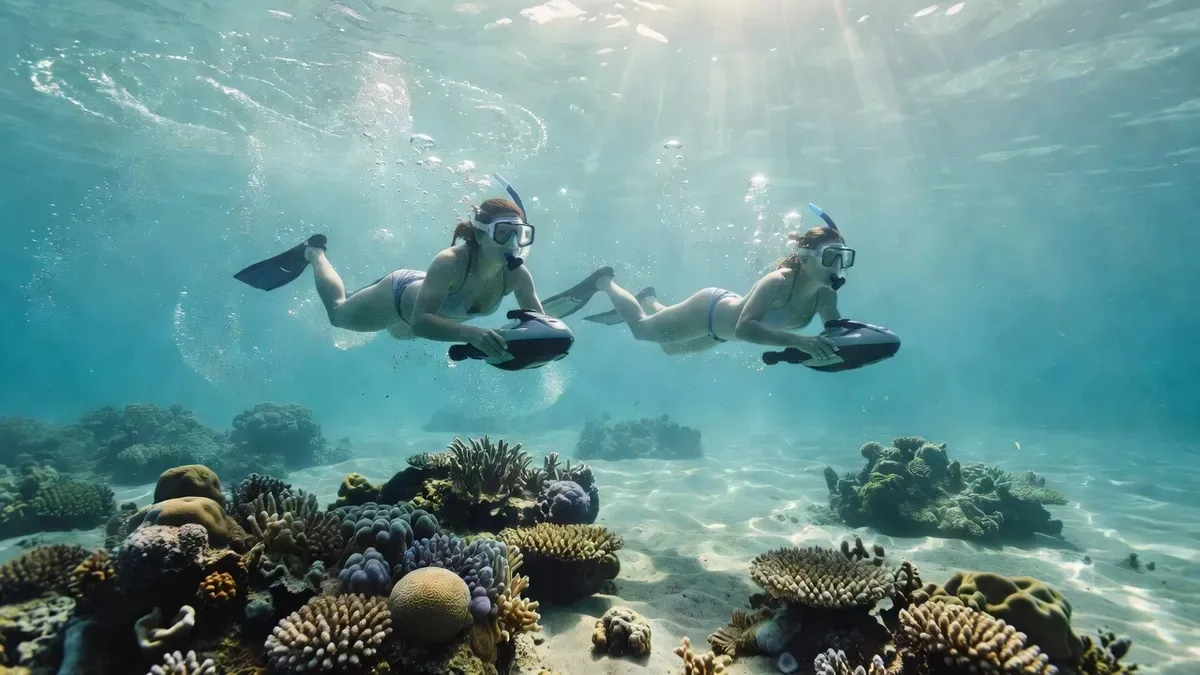
The jet snorkeling tour covers more of this sandy-channel ground per session than a standard swim, which improves the odds without changing them into a promise.
Hawksbill Turtle
Distinguished from the far more common green sea turtle by a narrower, hawk-like beak and an overlapping, tortoiseshell-patterned shell. Found on the deeper reef beyond Escambrón's main cove, rare. Hawksbills feed almost exclusively on sponges most other reef animals avoid, a specialized diet that keeps them tied to deeper reef structure most snorkel-depth trips don't reach, which is exactly why a sighting here is rare rather than routine.
Where Each One Lives Spots and Sites
Organized by site rather than species, since where you snorkel decides more of what you'll see than any other single factor.
| Site | What lives there | How you reach it |
|---|---|---|
| Escambrón Marine Park | Green sea turtles, blue tangs, sergeant majors, parrotfish, porcupinefish, octopus | Free shore entry at Balneario El Escambrón; most tours here, including the beginner and small group tours |
| Batería del Escambrón | Spotted eagle rays in the sandy channels, plus the same reef species as the main cove nearby | Reached by the jet snorkeling tour, which covers more sandy-channel ground per session |
| Playita del Condado | Blue tangs and small reef fish in the waist-deep shallows | Shore entry at the Condado Lagoon outlet near the Dos Hermanos bridge; the family tour starts here |
| Condado Lagoon | Antillean manatees, snook, tarpon | The sea turtle and manatee tour reaches the lagoon outlet where manatees feed |
What you can actually see, versus what's simply present, depends on more than the species list above. Escambrón's stone breakwater keeps the cove calm most days, which is why visibility there holds up better than an open beach; a stretch of onshore wind or a few days of heavy rain feeding runoff into the bay will cloud it regardless of what's swimming below. A crowded morning session also stirs up more sand off the bottom than a quiet one, so an animal that's genuinely there can still be harder to spot once a dozen fins have kicked up the shallows ahead of you.
When to See Them
Nothing on this list has a sharp migration window; every species here is a year-round resident rather than a seasonal visitor. What changes with the calendar is water clarity and comfort, not presence: sea temperatures run coolest around 79°F (26°C) from January through March and warmest around 84°F (29°C) from August through October, and the winter north swell that runs late November through March stirs up the north-coast shore spots enough to dim visibility on a rough day. For the full month-by-month breakdown of temperature and conditions, see our best time to snorkel in San Juan guide; this page only covers what you'll actually see once you're in the water.
What You Won't Usually See
No coral walls and no shark encounters here, and that's worth saying plainly rather than letting a photo from somewhere else set the expectation. San Juan's snorkel sites are shallow, sheltered reef and rock formations, not the dramatic drop-off walls divers chase elsewhere in the Caribbean.
The famous bioluminescent bays that show up in every Puerto Rico search are in Fajardo and on Vieques, not San Juan; the confusion comes from how often the two get bundled into the same trip itinerary online, but they're a separate excursion entirely. Culebra's Flamenco-style white-sand reef flats are also a real but different destination, a ferry or short flight away rather than anything you'll find off Condado. If either of those is genuinely what you're after, plan them as their own trip rather than expecting to find them here.
Rules of the Reef
Manatees are federally protected under the Marine Mammal Protection Act, and every sea turtle species in U.S. waters, including the green and hawksbill turtles here, is protected under the Endangered Species Act. NOAA marine life viewing guidance sets a minimum distance of 50 feet from sea turtles and marine mammals: never touch, chase or feed any of them, no matter how calm or curious an animal seems. Federal penalties for violating these protections can reach $50,000.
Reef-safe sunscreen is strongly recommended inside the marine park, since standard sunscreen chemicals damage the same rock and coral structure the fish here depend on.
How to Maximize What You See
A few habits that genuinely change what we spot on a given morning:
- We book the earliest slot available; marine life is more active and the water is calmer before the day's wind picks up
- We ask the guide directly where the last turtle was seen that morning, since guides track this informally and will point you straight there
- We stay still and let a turtle or ray approach on its own terms rather than swimming toward it, which almost always keeps it around longer
- We look at the rocks and ledges, not just open water, since octopus and porcupinefish hide in plain sight against structure
- We keep noise and splashing down near the rocks at Escambrón, since a quiet approach is what actually lets you get close to a feeding sergeant major nest
- We check conditions the night before and skip a session after heavy rain, since runoff visibly clouds the cove for a day or two afterward
If maximizing sightings is genuinely the priority, the VIP small group tour caps at 8 guests, which means less kicked-up sand and a guide who can actually point things out before the group swims past them.
Frequently Asked Questions
Will you definitely see a sea turtle at Escambrón?
Nothing in nature is guaranteed, but green sea turtles show up on nearly every trip to Escambrón Marine Park, the strongest odds of anything on this list.
Can you touch the sea turtles in Puerto Rico?
No. Every sea turtle species is protected under the Endangered Species Act, and NOAA guidance sets a minimum viewing distance of 50 feet, with no touching, chasing or feeding under any circumstances.
What's the rarest thing you might see snorkeling in San Juan?
A hawksbill turtle, distinguished from the common green sea turtle by its narrower beak and tortoiseshell-patterned shell, found only on the deeper reef beyond Escambrón's main cove.
Do you need to scuba dive to see turtles in San Juan?
No, the standard shore-based snorkeling tour is enough. Green sea turtles feed in the shallow rocky sections of Escambrón Marine Park that every beginner tour already covers.
Are there sharks in the water in San Juan?
Not a genuine concern at these shallow, sheltered sites. Escambrón and the Condado Lagoon outlet are shore-accessible reef and estuary environments, not the open-water habitat sharks favor.
What's the best month to see manatees in San Juan?
Manatees are present year-round around Condado Lagoon, with no sharp migration window. See our best time to snorkel in San Juan guide for how the calmer months affect overall visibility.
The honest version of what you'll see snorkeling in San Juan: green sea turtles and reef fish on almost every trip, a manatee on most Condado-lagoon outings, and the rarer finds, a ray, an octopus, a hawksbill, kept as genuine bonuses rather than promises. Compare the Condado and Escambrón snorkel tours that reach each site, and book the one that matches what you most want to see.